
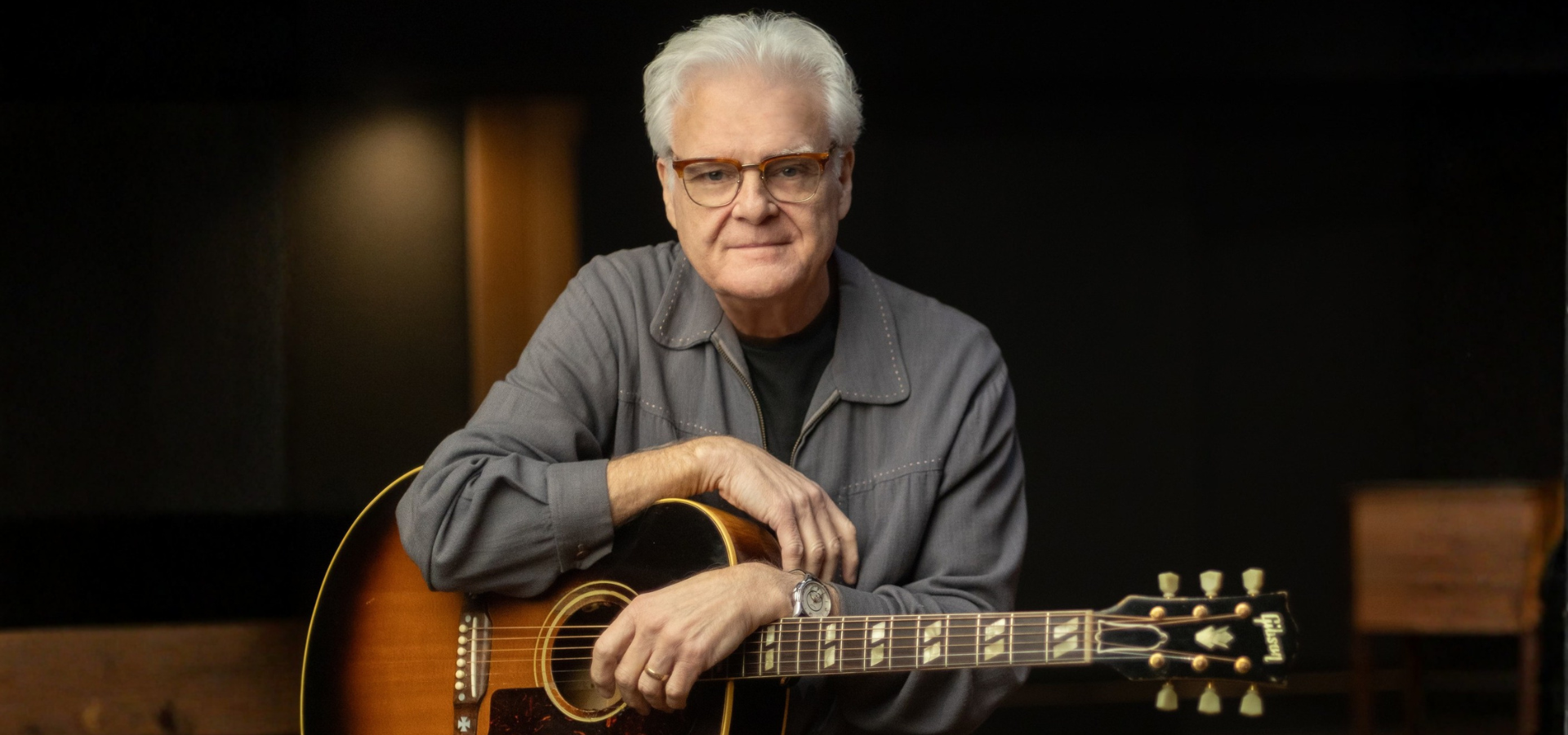
All through May, the GMA is highlighting roots music in every form, including Southern Gospel, Bluegrass, Country, and Country Gospel. We had the chance to sit down with roots artist Ricky Skaggs and hear about his remarkable journey as a musician, producer and composer.

About Ricky Skaggs
Ricky Skaggs has lived a life deeply rooted in music. By age 21, he was already recognized as a master of one of America’s most demanding art forms, though his career soon expanded into mainstream country music, bringing him widespread popularity and success. His musical journey has moved across multiple genres, beginning in bluegrass and continuing through new creative directions, all while staying firmly connected to his roots.
Skaggs first picked up a mandolin more than 60 years ago, and the 15-time Grammy Award winner remains a leading figure in the modern roots revival. He has earned 12 consecutive Grammy nominations for projects released through his Skaggs Family Records label, including Bluegrass Rules! (1998), Ancient Tones (1999), History of the Future (2001), Soldier of the Cross, Live at the Charleston Music Hall, and Big Mon: The Songs of Bill Monroe (2003), Brand New Strings (2005), Instrumentals (2007), Salt of the Earth with The Whites (2008), Honoring the Fathers of Bluegrass: Tribute to 1946 and 1947 (2009), and Ricky Skaggs Solo: Songs My Dad Loved along with Mosaic (2010). His music reflects a lifelong dedication to songs that are both soulful and heartfelt.
Tell us about your earliest memories with music and how you got started as a child.
Ricky: Some of my earliest memories are of singing around the house with my mom. She was always singing to the radio, and I started harmonizing with her when I was four or five years old. That really sparked my dad’s excitement. He was a welder working up in Ohio and brought me home a mandolin from a pawnshop. I woke up to it in my bed—I just loved the sound right away. I’m so thankful he bought something that fit my little five-year-old body.
What were some of your biggest early breaks?
Ricky: We went to see Bill Monroe in Martha, Kentucky. The crowd kept calling for me, and he finally brought me up and let me play his mandolin—the same one that’s now in the Country Music Hall of Fame. Later, Earl Scruggs heard me playing backstage at the Ryman and invited me to audition for the Flatt & Scruggs television show. My parents were incredibly supportive through all of it.
What led you to step back from mainstream country in the mid-90s and return to bluegrass?
Ricky: In 1996, both Bill Monroe and my father passed away in the same year. That really affected me. I felt the Lord drawing me back to the music I grew up with. I had recorded a song years earlier called “Simple Life” that felt almost prophetic. God was leading me back to a simpler life and to the traditional sound. I wanted to use the platform I’d built to help bring leadership and attention back to bluegrass. Starting Skaggs Family Records was one of the best decisions I ever made.
Was there a project where you saw God use your music in a powerful way?
Ricky: Even in my country days, I always included gospel songs in the shows. But the record that had the greatest Kingdom impact is Mosaic. It doesn’t sound like traditional gospel at all, but from Heaven’s point of view, it’s probably the most powerful thing I’ve ever done. My friend Gordon Kennedy (who co-wrote “Change the World” with Eric Clapton) wrote most of it.
You’ve described yourself as a “seed sower” in the marketplace. Can you tell us more about that?
Ricky: I never felt like I was supposed to keep my talent just in the church house. The gospel can reach people wherever they are. I’ve sung “Amazing Grace” a cappella in front of festival crowds where people were drinking and holding up beer cans, and they all sang along. The Holy Spirit isn’t ashamed to go anywhere we’ll take Him. God told me years ago: “Don’t open with gospel—earn the right to introduce Me” through great music first. Then present Jesus in a positive, powerful way.
Do you and the band pray before shows? What’s your heart when you go onstage?
Ricky: Yes, we always pray before every show that God will touch somebody in the audience, even if it’s just bringing joy, because joy kills sorrow. Jesus was more interested in getting the Kingdom into people than just getting people into the Kingdom. That’s the heart I try to carry with Kentucky Thunder.
Will we hear some gospel music when you’re out with Dierks Bentley this summer?
Ricky: Yes, definitely. We’re releasing a new single very soon called “Say a Prayer” that I recorded during the Mosaic sessions. It feels very timely for right now. With 45 minutes on Dirk’s show, we’ll be doing some gospel for sure.
How do you see bluegrass music today compared to when you first started?
Ricky: It was very traditional back then—Bill Monroe, Stanley Brothers. Today, with Billy Strings, Molly Tuttle, Sierra Hull, and others, the musicianship is at a whole new level. I love it, and I still enjoy playing the traditional roots, too.
Have you seen a resurgence of gospel bluegrass in mainstream culture?
Ricky: Yes, and it’s beautiful. I love watching crowds get quiet and respectful during gospel numbers. The Holy Spirit moves anywhere we’ll take Him.
What are some of your all-time favorite bluegrass gospel songs?
Ricky: “Walking in Jerusalem Just Like John,” “Angel Band,” “Hallelujah, I’m Ready to Go,” and, of course, “Amazing Grace.”
Ricky Skaggs & The Whites at the 2008 GMA Dove Awards
##