

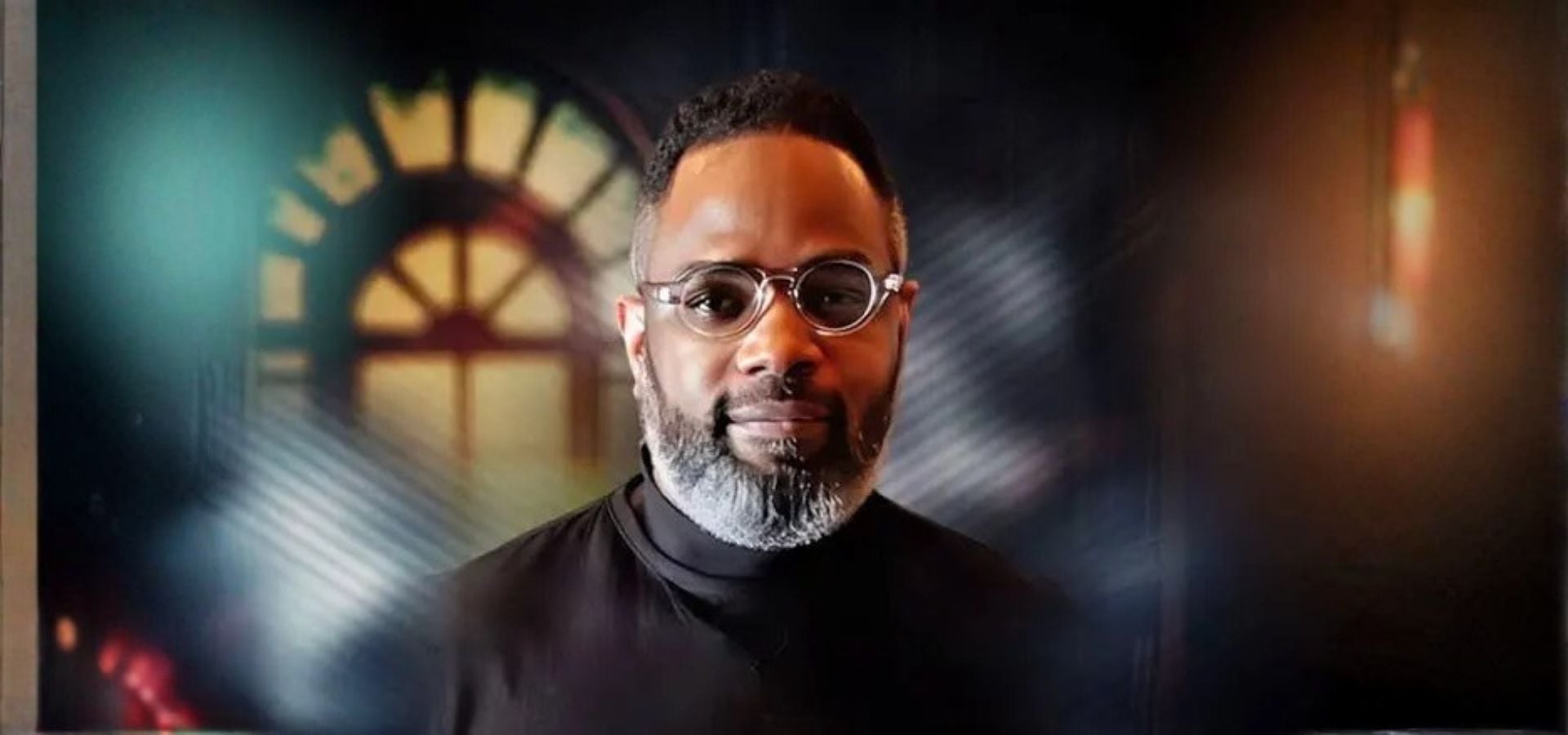
As Black Music Month comes to a close, we had the chance to sit down with gospel music trailblazer Hezekiah Walker to hear about his personal history with Black music and the enduring significance of gospel music today.

Tell us about your history with music in the Christian and Gospel space.
Hezekiah: What drew me to the music and the genre was that as a child, it’s all that I heard in my house. My mother played it, and in fact, we were only allowed to listen to gospel music. I grew up listening to it, and then eventually I just started liking the music. Every day, I kept hearing all this gospel music, and I realized that I used to leave school humming the songs I previously said I didn’t like. Finally, I just gave in to the music, thinking that the music was just going in my ears. But it was really going into my heart.
I decided I wanted to sing this music because I remember my mom listening to it, and sometimes she would cry. Sometimes she would smile, and sometimes she would get happy. I always said to myself, "I want to be able to sing music that can reach the total needs of a man." I knew this was the music I wanted to do because gospel has music for anything you're going through. We can pop out a song that will encourage you. Whatever mood you're in, we can put a song on.
That's the difference between gospel and other music. We have a song for anything that you are personally going through. If you're happy or if you're sad, we can pull out a song. That's why I decided to sing gospel.
What keeps me grounded in gospel music is seeing the lives that are being changed. When I get the stories and the testimonies, and when I run into people who start crying when they meet me and say, "Your songs have kept me and brought me through," that's what reminds me why I do what I do. I meet so many grown people now who say to me, "Bishop Walker, when I was in college, it was your songs that brought me through my college years." That is the thing that keeps me grounded. Plus, with the culture that we live in now, you have to keep your ear on what's happening so you can put music out that will really encourage people to stay focused and stay with God.
What is it about gospel music that makes it unique from other genres?
Hezekiah: I think what makes gospel unique from other genres is that we're able to reach the total needs of the total man. Some music out there is only focused on one side of an individual. But with gospel, we can reach the total needs of a man. Whatever it is, we got you.
Right now, I'm thinking about creating something to help those who are terminally ill. I want to design a music therapy program that will incorporate gospel music to help people who are going through some kind of terminal illness. I think that's what makes our music different, because it's therapeutic.
How do you see the genre influencing culture and impacting people today?
Hezekiah: I see the genre impacting culture because we don't just sing songs about struggle and what we've been through. We are a proud group of people who understand struggle, pain, and what we've been through as a community. But we also understand celebration. Our music is not just attached to struggle but also to celebration. I think that's the totality of it. We go through to come out. I think that's what really makes it celebratory, because we understand that although we go through, we definitely come out. There's always a midnight, but then there's always a morning.
How have you seen the genre evolve over the years? And what excites you the most about its future?
Hezekiah: The genre has evolved tremendously over the years because we have new artists on the scene. We have people out now who were kids when I started. They've been watching me and others, and now they've taken it to the next level. Even when I came on the scene, we were able to take the gospel music of our forefathers and bring it to another level. That's what's happened now. Gospel has evolved to the point now where everybody is attracted to it. Everyone likes the sound and the look, and I'm grateful for that.
I'm also grateful that God has sustained me to still be a part of it, you know? Because most people just kind of fizzle out. But it's been over 40 years, and God has blessed me to still make music that people will say, “I need to hear this,” or “I need to sing this in my worship.” That's one of the things that I stay true to. Because of course, I want music to go out where people can hear it, but my main thing is to sustain the church. We still need music for the church.
People will say, “Bring the choir back.” But I say, the choir ain't never went nowhere! Because the church is still alive. Even through COVID. You can't come to church, especially in our culture, and not want to hear the choir. You're gonna want to hear the sound of the choir. So I make sure I write and sing music that choirs can sing, but then I also make music that the praise team and the worship team can do, because that's what it's all about. I think when you mix the praise team and the worship-style music now with the choir music… man, it's powerful.
Can you talk a little bit about the impact that choir music is still having today internationally?
Hezekiah: The impact that choir music is having on people in other countries is amazing. I frequently go to Brazil and Africa. As a matter of fact, next year in Africa around this time, my Hezekiah Walker Center for Performing Arts will be up. That's all because of the love of choir music there. You can't go into Africa and not sing a choir song. They love choir music. We go twice a year, and it's just amazing. They gravitate to it, and they learn from us, too.
But the sound that they have there, the choir, the unity that they have there… I think most people in the States need to see what choir music does. They would have a greater appreciation for it when they see it's impact in other countries. It's just amazing how people worldwide love choir music, but it seems like those of us here in the States kind of want to get rid of it, you know?
I believe this: What comes from the heart reaches the heart. I love the sound of the choir. I love the harmony, and other people love it as well. So I think it's very important that we step outside the confines of what's here in the States and share the music.
For someone new to Gospel music, where is a good place to start?
Hezekiah: I think what they should do is really start within themselves. Because what you don't want to do is try to mimic anyone else. You want to be able to give the earth what God has given you.
Then once you're satisfied with what you have to offer, you can look into other artists that really have captured your ear and your heart, and you can gravitate to and learn from them. But I think the foundation should always start with you.
##
About Hezekiah Walker
Gospel singer, composer, and choir leader Hezekiah Walker was born December 24, 1962 in Brooklyn, New York, and grew up in the Fort Greene housing projects. He formed his first gospel group, the Love Fellowship Crusade Choir, when he was in his twenties and serving as a Pentecostal minister. Walker and the choir released a pair of albums in 1987 and 1990 before Walker turned to a solo career, releasing Focus on Glory in 1992. A year later, he released Live in Toronto, which proved to be his breakthrough, and the album hit the top of the gospel charts. Forming another choir, this one called the Love Fellowship Tabernacle Church Choir, Walker continued to release albums recorded live on the church circuit, including Live in Atlanta at Morehouse College in 1994, Hezekiah Walker Presents the LFT Church Choir in 1998, Family Affair in 1999, and Love Is Live! in 2001. Along the way, Walker brought many young people to gospel and choir music, and has shown he has no problem using modern vernacular and recording techniques to expand his fan and worship base. Souled Out appeared in 2008, followed by Azusa: The Next Generation in 2013, both from Verity Records.
Bishop Hezekiah Walker is the visionary, founder and Senior Pastor of the Love Fellowship Tabernacle Churches in Brooklyn, New York and Bensalem, Pennsylvania. Pastor Walker shepherds a growing and multi-cultural flock of members varying in age, race and socio- economic backgrounds. Born and raised in Brooklyn in the tumultuous Fort Greene public housing projects, he has risen to build and lead one of the greatest ministries in the Northeast.
Love Fellowship Tabernacle was birthed in November 1993. The cradle of the Tabernacle’s humble beginnings began with only eight members. The church, located in the East New York section of Brooklyn, focused on the young adolescents in the community. As a result, many young people turned from a life of drugs, crime and sin because of his ability to preach, teach and “rightly divide” the Word of God without fear or reservation.
The need for souls to be saved was always a priority on the heart of Pastor Walker; so on Easter Sunday 1996 Love Fellowship Tabernacle relocated. What had begun with only eight members had quickly blossomed to over 1,000 members.
The vision God gave to Pastor Walker was founded on the three “P’s:” Prayer, Preaching and Praise. As he led the people of God into prayer and praise, he labored diligently in the preaching of the gospel to ensure that people of all ages received Jesus Christ as their Lord and Savior. His ability to motivate, inspire and empower through the Word of God drew people from all walks of life to the Tuesday night prayer and Bible study, now known as the “Prayer Capital of New York City.” Presently, Pastor Walker and the church family are awaiting the construction of their new mega-church facility (The Kingdom Cathedral) to accommodate the overflow of souls.